At SXSW2018, Lunavity, a jumping ability augmentation system is exhibited:

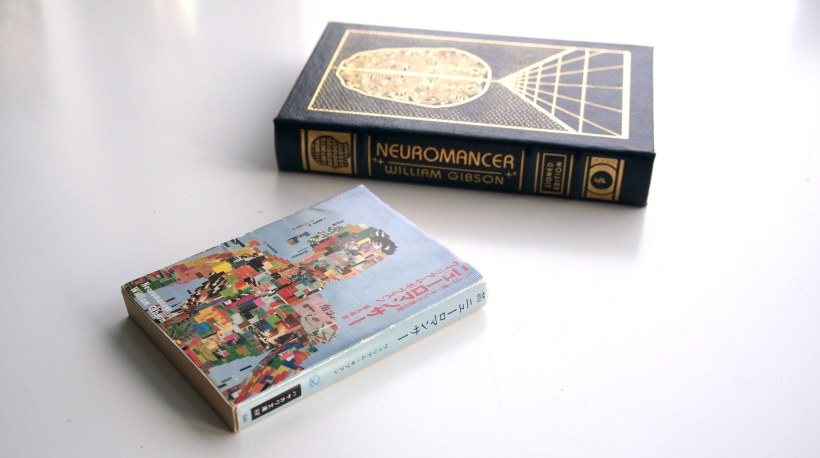
大学院情報学環 ヒューマンオーグメンテーション学(ソニー寄付講座)主催でシンポジウムを開催します。ゲストに早稲田大学文学学術院のドミニク・チェン氏、小説家の上田岳弘氏をお迎えして、文学とテクノロジーの相互関係から人間拡張学の未来を議論したいと考えています。下記イベントページよりお申込みの上、是非ご参加ください。
日時:
2018年3月26日(月) 16:00~18:00 (15:00 開場)
詳細は下記イベントページをご参照ください:
https://humanaugmentation.jp/events/symposium2018/

We will present the following two papers at ACM IUI (Intelligent User Interfaces) 2018

Interaction 2018 で以下の論文を発表します:
以下の論文がAugmented Human 2018でBest Paper Award を受賞しました。山下君おめでとう!
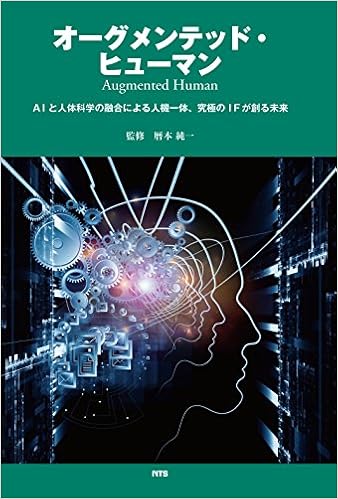
60名の執筆者による「オーグメンテッド・ヒューマン Augmented Human―AIと人体科学の融合による人機一体、究極のIFが創る未来」(監修:暦本)が発刊されます。
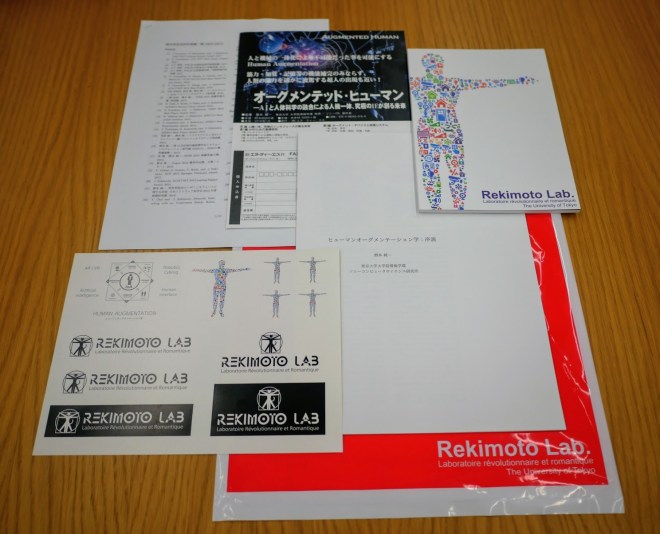
2017/11/23に開催しました暦本研究室オープンハウス #rkmtlab2017 でお渡ししていた資料をご希望の方にお送りします。返送用の角2号封筒に宛先を記入し郵送料として切手250円分を貼ったものを以下までお送りください。
〒113-0033 東京都文京区本郷7-3-1 東京大学情報学環 暦本研究室 [資料希望]
資料には
が含まれています。Research Archivesは和英併記です。
※ 国外宛先へ送付ご希望の方: 資料の重量が210g程度なので必要な切手等を添付の上返送用封筒を送付ください。
※ 返信用封筒の不備や送料不足の場合は対応できませんのでご注意ください。
Upon request, we will send you the materials we supplied at Rekimoto Lab OpenHouse 2017. The materials include:
The Materials weight 210g. Please put appropriate stamps on the return envelope, with your return address, and send it to:
Rekimoto Lab.
Interdisciplinary Initiative in Information Studies,
The University of Tokyo
7-3-1 Hongo, Bunkyo-ku
Tokyo 113-0033 JAPAN
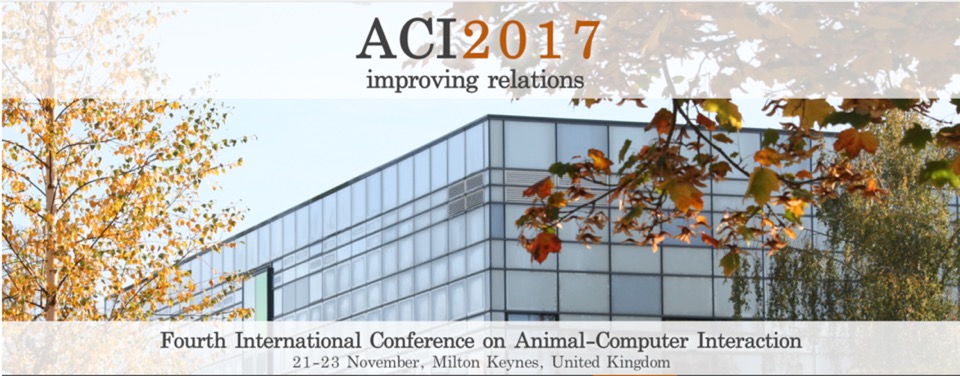
At Animal-Computer Interaction 2017, the following paper will be presented.
Conference: 4th International Conference on Animal-Computer Interaction(ACI2017, Nov. 21-23, Milton Keynes, United Kingdom)
https://sites.google.com/site/utacsorg2015/
第一回:2017年10月21日(土)13:00〜15:00
第二回:2017年11月10日(金)18:30〜20:00
───────────────────────────────
2018年4月の修士課程、博士課程の、冬季入学試験に向けた
総合分析情報学コースの説明会を開催します。
受験をご検討している皆さんは、是非ご参加下さい。
各研究室紹介等や入学試験の概要を説明をします。
第一回説明会
日時:2017年10月21日(土)13:00〜15:00
場所:本郷キャンパス(〒113-0033 東京都文京区本郷7-3-1)
ダイワユビキタス学術研究館 3階 大和ハウス石橋信夫記念ホール
(http://www.u-tokyo.ac.jp/campusmap/cam01_14_04_j.html)
第二回説明会
日時:2017年11月10日(金)18:30〜20:00
場所:本郷キャンパス(〒113-0033 東京都文京区本郷7-3-1)
ダイワユビキタス学術研究館 2階 204 教室
(http://www.u-tokyo.ac.jp/campusmap/cam01_14_04_j.html)
■総合分析情報学コース入試について
総合分析情報学コースでは、修士課程、博士課程の夏季と冬季と2回の入試を実施します。
◯修士課程 募集人員:19名(夏季.・冬季入試との合計人数)
◯博士課程 募集人員:8名(夏季.・冬季入試との合計人数)
※募集要項がすでに公開されています。
詳細は、http://www.iii.u-tokyo.ac.jp/admissionsをご覧ください。
■総合分析情報学コースについて
東京大学大学院情報学環・学際情報学府 総合分析情報学コースは、IoTやビッグ
データを利活用した情報社会時代を支える情報学「総合分析情報学」を開拓する
ために2006年に設立された新しい教育研究機関です。コンピュータ・アーキテク
チャ、ソフトウェア工学などのコンピュータ・サイエンス、コンピュータ・ネッ
トワークをベースとした、ユビキタス・コンピューティング、組込みコンピュー
タ、ユーザーエクスピリエンス、次世代インターネット、これらの技術によって
取得された実世界や仮想世界の様々な情報をデジタルデータとして流通させて状
況認識を行い、さらにそれを実社会で有効に活用するための高度な情報分析手法
を研究開発します。その成果はトレーサビリテイ、医薬品情報学、空間情報認識、
防災、社会資本管理、自律移動支援、ドローン、自動走行自動車などの様々な分
野に展開されます。
■参加申込
氏名・所属・連絡先をご記入の上、symposium@utacs.org までメールでお申
し込みください。
申込受付のお返事はいたしません。お申し込みの際にご記入いただいた個人情報
につきましては、本会の参加者管理の目的以外には使用いたしません。
※ なお、お申し込みの無い方でも、当日定員が超過していなければ入場できます。
■お問い合わせ先
symposium@utacs.org
Pedro Lopes (Hasso Plattner Institute, Germany) will give a lecture at Tokyo University Daiwa Ubiquitous Hall.
Date & Time: Oct 3rd, 2017 13:00- (Doors open around 12:50)
Venue: Ishibashi Hall, Daiwa-Ubiquitous Research Building (3F), The University of Tokyo (direction)
Note: This lecture is a part of Tokyo University
Advanced Lectures in Applied Computer Science XII 東京大学大学院講義:総合分析情報学特論XII (aka Human-Computer Interaction Lectures), but it is open to the public.
Abstract: In the past years interfaces got closer and closer to the human body to the point that now, they literally attach to it, such as wearable devices and virtual reality headsets. These provide a very direct and immersive interaction with virtual worlds. But what if, instead, these interfaces were “part of our body”? In this talk I introduce the idea of an interactive system based on electrical muscle stimulation (EMS). EMS is a technique from medical rehabilitation in which a signal generator and electrodes attached to the user’s skin are used to send electrical impulses that involuntarily contract the user’s muscles. While EMS devices have been used to regenerate lost motor functions in rehabilitation medicine since the ’60s, it has only been a few years since researchers started to explore EMS as a means for creating interactive systems. These more recent projects, including six of my projects, explore EMS as a means for teaching users new motor skills, increasing immersion in virtual experiences by simulating impact and walls in VR/AR, communicating with remote users and allowing users to read & write information using eyes-free wearable devices.
Bio: Pedro is a researcher at Prof. Baudisch’s Human-Computer Interaction Lab at the Hasso Plattner Institute, Germany. Pedro’s work is published at ACM CHI/UIST and demonstrated at venues such as ACM SIGGRAPH and IEEE Haptics. Pedro has received the ACM CHI Best Paper award for his work on Affordance++, several nominations and exhibited at Ars Electronica 2017. His work also captured the interest of media, such as MIT Technology Review, NBC, Discovery Channel, NewScientist or Wired.
(Learn more about Pedro’s work here: plopes.org/).

 Rekimoto Lab
You must be logged in to post a comment.